Maddy McDaniel Steps Away From South Carolina Basketball to Prioritize Her Mental Health
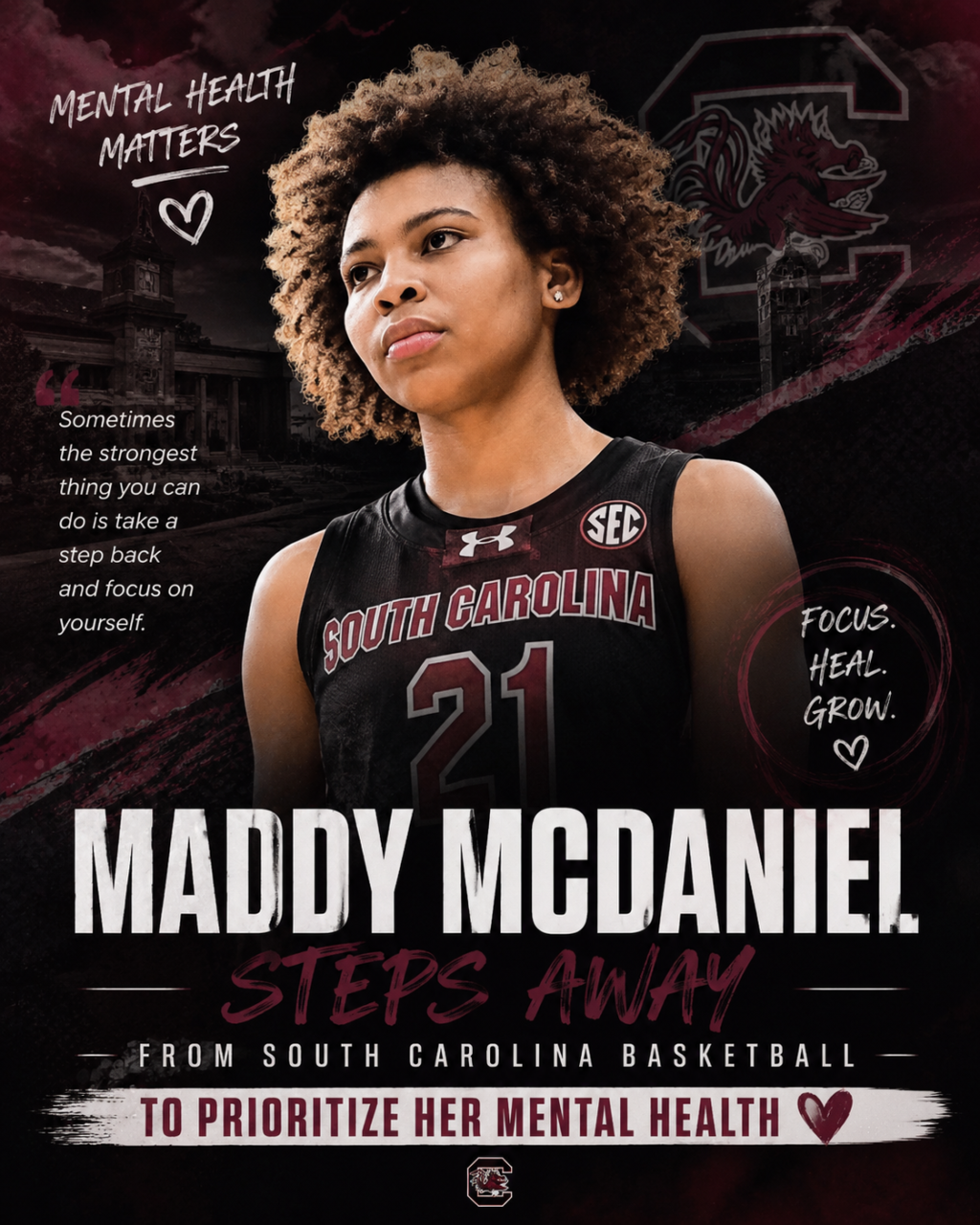
South Carolina guard Maddy McDaniel announced on social media that she is stepping away from the team to focus on her mental and emotional well-being, sharing a personal, handwritten statement that offered a candid look at what led to the decision.
A statement built on honesty, not obligation
McDaniel’s message stood out for its directness about a topic athletes don’t always address publicly. “Every athlete knows that mental strength is as valuable as their physical strength,” she wrote. “It just doesn’t announce itself in the same way when it needs attention. It doesn’t feel like an ankle sprain or a bruise. It’s harder to put your finger on.” That framing does real work — it draws a clear distinction between the kind of injury fans are used to seeing announced (a sprain, a tear, a diagnosis with a timeline) and the kind that has no visible marker, which makes both the decision to speak up and the decision to step away considerably harder.
She continued: “Still, it’s time for me to acknowledge it. I’ve tried to just keep going, but right now I’m not giving my coaches, my teammates and the FAMS the version of myself that they deserve. So, I have decided to step away from the team to focus on my mental and emotional well-being, to get back to my best self on all levels.”
That progression — trying to push through, then recognizing the toll it was taking on the people around her — is a common pattern for athletes dealing with unseen struggles, and McDaniel’s willingness to name it directly, rather than citing a vague “personal matter,” is notable in itself.
Framing the decision as strength, not retreat
Perhaps the most pointed line in her statement was her own characterization of the choice: “It is the strongest thing I can think of to do because of what being part of Gamecock Women’s Basketball means to me.” That’s a deliberate reframing. Stepping away from a high-profile program is often perceived externally as a setback or a negative development, but McDaniel explicitly positioned it as the opposite — an act of strength rooted in how much the program means to her, not a sign of diminishing commitment.
She closed with gratitude and an eye toward the future: “I appreciate everyone who has supported me, and I will be working hard to get back to being the person who has earned that.”
Dawn Staley’s response reinforces a culture of support
South Carolina head coach Dawn Staley followed with her own statement, and her words matter as much for what they signal about the program’s culture as for what they say about McDaniel specifically. “If we see anyone in our program going through something, we give them the space and the grace to work through it,” Staley said. “When they embrace that it may take more than that, we embrace that, too.”
Staley added: “Maddy’s decision is a difficult one for a young person to make, and I’m glad she felt our program was a safe place for her to make it.” That last line is significant — a head coach publicly affirming that a player felt safe enough within the program to step away is a meaningful statement about the environment Staley has built, and it stands in contrast to programs where mental health struggles are more often hidden than addressed.
What South Carolina loses on the floor
On the basketball side, McDaniel’s absence is a real one. As a sophomore, she averaged 4.3 points and 2.7 assists in 19.7 minutes per game — a rotational role that made her a consistent ball-handling and playmaking option off the bench. Losing that kind of minutes-and-assists contribution doesn’t reshape South Carolina’s ceiling the way losing a star would, but it does thin out the program’s guard depth heading into next season, an area that will now need to be addressed either through returning players stepping up or continued roster additions.
The bigger picture
Ultimately, though, the basketball impact is secondary to the substance of the announcement itself. McDaniel’s statement and Staley’s response together read less like a typical roster update and more like a program modeling how to handle a player’s mental health openly and supportively — treating the decision with the same seriousness and care that would accompany a physical injury announcement, rather than downplaying it. For a sport where mental health conversations have historically lagged behind physical health ones, that public framing carries weight well beyond South Carolina’s own roster.
If you or someone you know is struggling with mental health, the 988 Suicide & Crisis Lifeline is available 24/7 by call or text at 988.
About The Author