
Offensive Struggles Follow South Carolina Baseball Home in 8-3 Loss to No. 19 Alabama
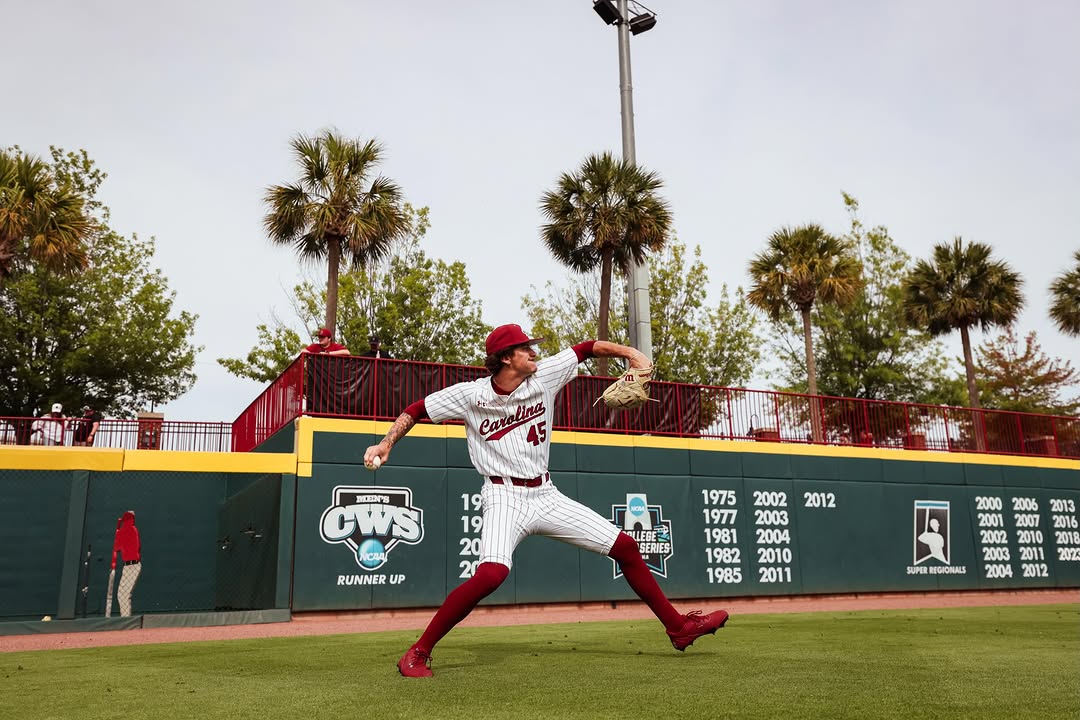
The trip home from Baton Rouge was supposed to offer the South Carolina baseball team a chance to reset. A familiar stadium, a home crowd, and the comfort of Founders Park — the kind of environment that struggling teams lean on to rediscover themselves. Instead, the same problems that plagued the Gamecocks all week in Louisiana followed them straight back to Columbia.
South Carolina fell 8-3 to No. 19 Alabama on Friday, dropping to 22-28 overall and 7-18 in SEC play. The offensive output — four hits, 13 strikeouts, and just one run against the opposing starter through seven innings — was a continuation of a pattern that has become the defining characteristic of this team’s season. After scoring just four runs in four games at LSU last week, the Gamecocks have now managed to score only seven runs across five games. That is not a slump. That is a structural problem.
Alabama Was Simply Better — And Monte Lee Said So
Interim head coach Monte Lee didn’t look for excuses when facing the media after the loss, and that honesty, while difficult to hear, reflects the kind of accountability this team needs to move forward from.
“Give Alabama a lot of credit, played a great baseball game. They jumped on us early, put together the big inning in the second,” Lee said. “They pitch, they hit, play good defensively. They played a complete game, and they deserve to win.”
Every word of that assessment was accurate. The Crimson Tide executed at every phase — starting pitching, timely offense, and defense — while the Gamecocks struggled to solve a right-hander who never lost control of the game.
Tyler Fay Was a Problem This Team Simply Couldn’t Solve
Alabama right-hander Tyler Fay, who threw a no-hitter against Florida earlier this season, was at his best against South Carolina — and the Gamecocks’ lineup, which has struggled with consistency all year, had no adequate answer for his four-pitch arsenal.
Fay worked through seven innings, gave up one run on two hits, and struck out 10 — his third double-digit strikeout performance of the season. The lone run he surrendered came in the fourth inning when Talmadge LeCroy opened with a leadoff double and KJ Scobey drove him in with a two-out RBI single to left. After that hit in the fourth, South Carolina didn’t record another until the eighth inning. For nearly four full frames, Fay was untouchable.
Lee offered a detailed and analytically precise breakdown of why Fay was such a difficult matchup, and it illuminated the genuine tactical challenge the Gamecocks faced.
“He threw a two-seam fastball and a four-seam fastball. So he’s a really hard matchup for right-handed hitters, because you can’t really sit on one side of the plate or the other,” Lee explained. “He threw a changeup to right-handed hitters, too. You don’t see a lot of guys that can do that. So it’s really kind of a four-pitch mix, I would say, because he’s throwing two fastballs, the breaking ball and the changeup.”
That breakdown matters beyond this single game. A pitcher who can attack both sides of the plate with multiple fastball shapes and has the secondary pitches to keep hitters off-balance is a legitimate challenge for any lineup in the country. South Carolina’s offense, which has lacked the kind of run-producing depth to consistently solve high-end pitching all season, was always going to be vulnerable to exactly this type of outing.
The final damage: four hits, 13 strikeouts, two runs in the eighth that came on wild pitches rather than earned contact. That is the box score of a team that was outpitched from the opening inning and never found a way back into the game.
Phillips Battled Through — But the Early Damage Was Done
South Carolina starter Amp Phillips has been one of the few consistent bright spots in this team’s pitching rotation, but a troubling trend has emerged over the last month. Since throwing eight shutout innings at Missouri on April 10, Phillips has now given up at least three earned runs in each of his last four starts. Friday was no exception.
Alabama came out aggressive in the first inning, squaring up several balls into long flyouts that previewed what was coming. The second inning arrived, and the Crimson Tide didn’t miss — two home runs, two walks, four runs scored, and the game’s competitive outcome effectively decided before South Carolina had recorded six outs.
What followed, however, was a version of Amp Phillips that deserved genuine credit. After the four-run second, he pitched through 5.1 total innings, held Alabama scoreless the rest of his time on the mound, and gave the Gamecocks’ bullpen a chance to breathe. In a game that was already out of hand, that kind of professional response from a starting pitcher under pressure matters.
Lee acknowledged it directly and without reservation.
“I give Amp credit. I mean, good lord, after the second inning, it could have went south quick,” Lee said. “He stayed out there, and he battled, and we got deeper into the ballgame and helped us not have to burn too many guys out of the pen. So he did a good job of competing and staying out there for us.”
That is an honest assessment of a pitcher who absorbed a bad inning and responded with accountability rather than unraveling. In a season with limited positives, that response is worth noting.
Lee Turns the Mirror on Himself
The most candid moment of the postgame came when Lee addressed the team’s ongoing offensive struggles and, in a moment of striking self-awareness, directed the critique inward.
“I just think I probably just need to stop talking and start doing. I think that’s probably it,” Lee said. “I talk too much sometimes to players. I try to coach my way through things, sometimes with the players, just to try to give them everything I can. I think oftentimes just kind of backing off, sometimes it’s the best thing that can happen.”
This is a meaningful admission from a head coach, and it reflects a level of genuine self-examination that is rare in postgame settings. The implicit acknowledgment is that when a team is struggling this profoundly with the bat, over-instruction can become its own obstacle — creating mental noise for hitters who need simplicity and freedom to perform. Lee appears to be arriving at the conclusion that his players need space more than they need information, and that lesson, if applied consistently, could produce a different kind of at-bat quality even if the results don’t immediately change.
What Saturday Needs to Be
South Carolina will attempt to salvage a series split in Saturday’s afternoon game at 1 p.m. on SEC Network, with Brandon Stone (5-3, 3.94 ERA) taking the mound. It will also be Senior Day, with five players set to be honored before first pitch — a ceremony that deserves a performance worthy of the occasion.
Stone’s ERA reflects the kind of starter who can give the Gamecocks a genuine chance to win on any given day, and coming out of a loss, the emotional reset that a Senior Day atmosphere provides can sometimes unlock something in an offense that statistics alone cannot. The Gamecocks need a win badly — not just for the series standing, but for the confidence that has been quietly eroding under the weight of a season that has taken far more than it has given.
The offense cannot afford another four-hit afternoon. Saturday needs to be different.
About The Author