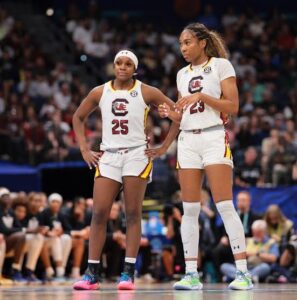
She Helped Build the Dynasty as a Player — Now Former Gamecocks Guard Olivia Gaines Is Building Her Own
The South Carolina women’s basketball coaching tree keeps growing branches, and every new one tells the same story: Dawn Staley doesn’t just develop players. She develops people who go on to shape the next generation of the sport.
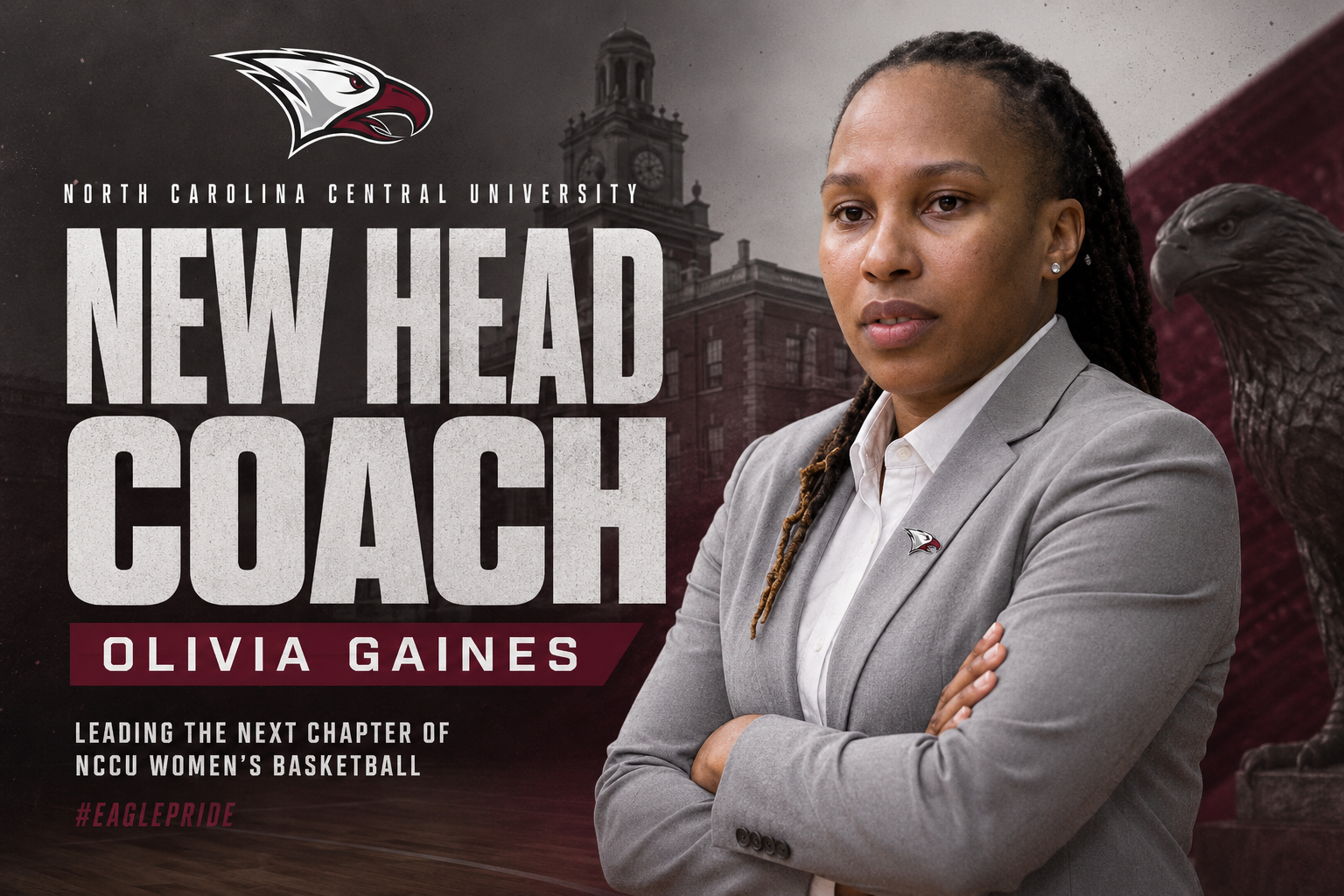
The latest branch reached Division I on Thursday. Per a report from USA Today’s Mitchell Northam, former South Carolina guard Olivia Gaines is set to become the next head coach at North Carolina Central — her first Division I head coaching appointment and the culmination of a coaching journey that has been as deliberate as it has been varied.
The Long Road to Division I
Gaines’ path to this moment did not follow a straight line, and that is precisely what makes it worth telling. She spent two seasons at the helm of Allen University in Columbia — a Division II program just miles from where she once played for the Gamecocks — and built the kind of foundation that earns you the next conversation. Before Allen, she had head coaching stints at Richard Bland College, USC-Salkehatchie, Andrew Jackson High School, Fort Dorchester High School, and Cross High School, along with assistant coaching stops at Georgia Southern, Vassar College, and Northwestern Oklahoma State.
What that résumé represents is not a career that stumbled toward opportunity — it is a coach who said yes to every level, learned something at every stop, and built a portfolio of experience that covers youth development, junior college basketball, NAIA, Division II, and now, Division I. That breadth is an asset, not a detour. Head coaches who have seen the game from multiple angles — who have recruited players who aren’t receiving Power conference attention, who have built rosters without the resources of major programs, who have earned wins with less — tend to understand the craft of coaching more completely than those who ascended through a single, well-funded system.
NC Central is getting a coach who has paid every kind of dues available in this profession.
A South Carolina Native Who Came Home — and Then Back Again
The geography of Gaines’ story adds another layer worth appreciating. Born and raised in South Carolina, she starred at Chester High School before spending two seasons at Louisburg College in North Carolina — where she didn’t just play, she dominated. The Women’s Basketball Coaches Association named her Junior/Community College Player of the Year, a recognition that confirmed the talent level that eventually brought her to Columbia.
When Gaines arrived at South Carolina, she was stepping into a program in the middle of an awakening. She was part of Carolina’s first 30-win season, contributed to Sweet 16 and Final Four appearances, and played a specific, memorable role when the moments demanded it. The 2014-15 Final Four — the first in program history — was built in part on her shoulders.
The sweet moment that crystallizes Gaines’ competitive character came in the 2015 Sweet 16 against North Carolina. With South Carolina’s season hanging in the balance in the final 90 seconds of a tight game, Gaines knocked down a game-tying three-pointer. Not a contribution player’s cautious pass to the star. Not a dribble-out-the-clock choice. A three-pointer, in the final 90 seconds, against a program from her home region, with the season on the line. That is the kind of shot that reveals who a person is.
Those South Carolina teams received NCAA Tournament No. 1 seeds in both 2013-14 and 2014-15 — the first such instances in the program’s history. Gaines was in the building for both, coming off a bench that backed up names like Tiffany Mitchell, Khadijah Sessions, and Asia Dozier — a rotation of names that Gamecock fans of that era remember as the core of a program crossing over from contender to consistent national threat.
What Carrying Staley’s Culture Forward Actually Looks Like
There is a version of the “coaching tree” story that becomes repetitive — former player gets job, program cites lineage, cycle repeats. What distinguishes Gaines’ appointment from a simple narrative of pipeline success is the authenticity of her own journey through the sport.
She did not wait for the right brand-name assistant job to open up at a high-major program. She went to the high schools, the junior colleges, the NAIA programs, the small Division II schools — and she did the work that most coaches with more resources or connections would consider beneath their trajectory. That willingness to root herself in the game at every level, to prioritize development over positioning, reflects something she almost certainly absorbed watching Dawn Staley operate: the belief that the work itself is the credential.
Staley’s coaching tree is now populated by former players who have taken head coaching jobs across multiple levels of the sport — a natural downstream effect of a program that trains competitors who think like coaches. Gaines represents something specific within that tree: the long-game version, the coach who didn’t take shortcuts, the one whose Division I opportunity arrived after years of proving she could build things from scratch without a safety net.
NC Central is inheriting more than a basketball coach. They are inheriting a system of values, a work ethic, and a competitive philosophy that was forged in garnet and black and refined across two decades of coaching at every level this sport has to offer.
Olivia Gaines helped build the dynasty as a player. Now she gets to build one of her own.
About The Author