
She’s Worth Every Penny — And The WNBA Just Finally Admitted It
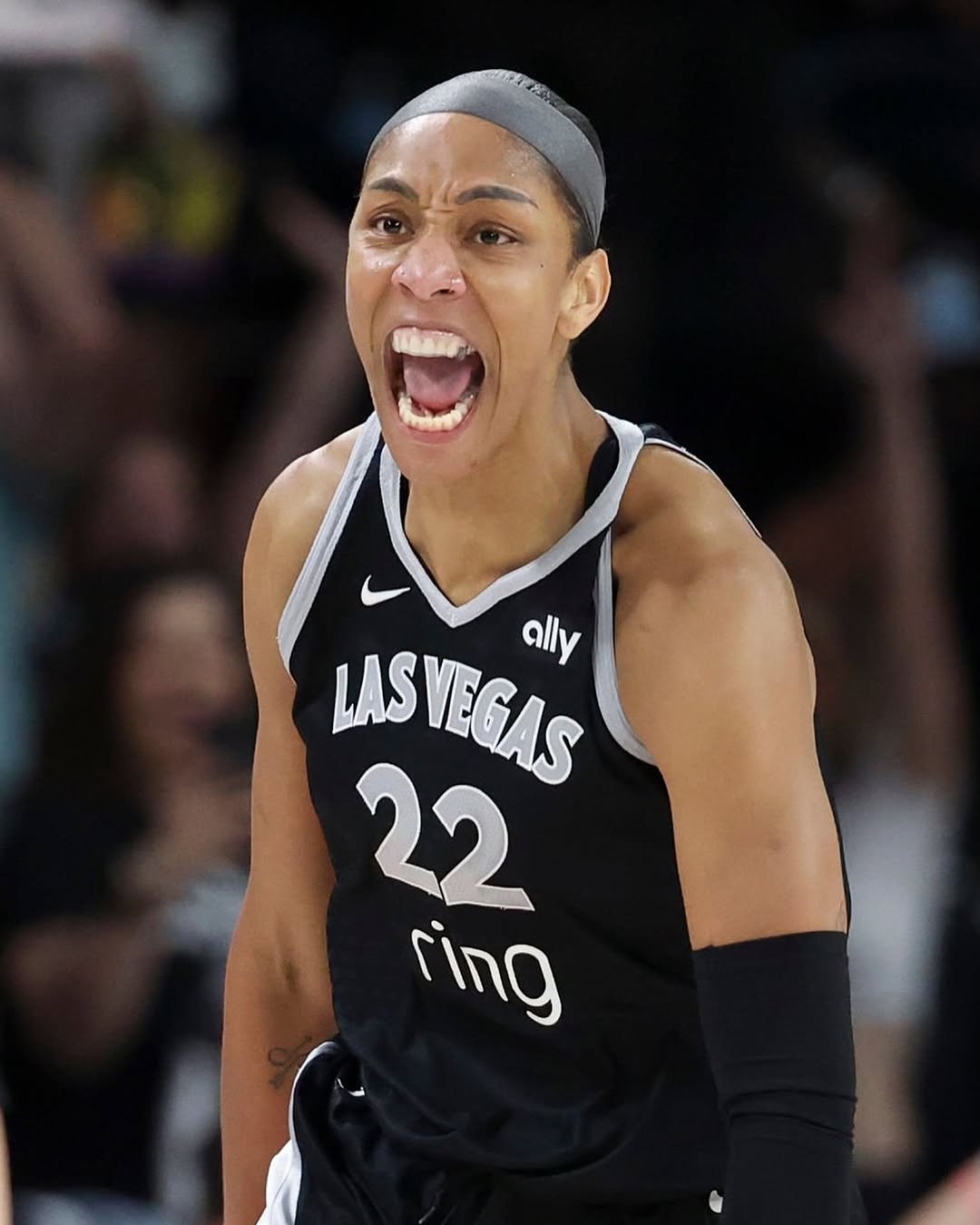
For years, the conversation around A’ja Wilson carried an uncomfortable undercurrent: that the greatest player in the world was being paid like a mid-level corporate employee. That era is officially over.
The Las Vegas Aces announced Wednesday that Wilson has re-signed with the franchise on a fully guaranteed supermax contract worth $5 million over three years — the largest deal in WNBA history. But the structure of the deal is what makes it truly groundbreaking. The contract was negotiated to ensure Wilson will earn, as the Las Vegas Review-Journal reported, “20% of the salary cap as it increases every year” — meaning as the league grows, so does her slice of it. That’s not just a contract. That’s a statement of intent.
The Numbers That Made This Inevitable
To understand why this contract was not just deserved but overdue, you have to look at what Wilson has done on the court — because the résumé is almost absurdly decorated.
Last season alone, Wilson averaged 23.4 points, 10.2 rebounds, 3.1 assists, 1.6 steals, and 2.3 blocks for the Aces. She became the first player in WNBA history to win four MVP awards, led Las Vegas to their third championship in four years, and was named Co-Defensive Player of the Year for the third time in her career. She is a seven-time All-Star, a six-time All-WNBA selection, and has earned five All-Defensive Team honors.
And then there’s this: Wilson is the only player in league history to average at least 20 points, nine rebounds, two assists, two blocks, and one steal per game in a single season — a feat she has accomplished twice. That combination of offensive dominance, rebounding, and defensive impact isn’t just rare. It’s unprecedented. No one else in the history of the sport has done it once, let alone twice.
This is the player the WNBA has been paying fractions of what her NBA counterparts earn. The gap between Wilson’s value and her compensation was, for a long time, one of the sport’s most glaring injustices.
The CBA Changed Everything
The contract’s jaw-dropping size doesn’t exist in a vacuum. It’s the direct result of the WNBA’s historic new collective bargaining agreement, which fundamentally restructured how players are compensated across the board.
Under the old CBA, the supermax contract — the highest individual salary available — was capped at a staggering $250,000. Under the new agreement, that figure jumped to $1.4 million. The league-wide salary cap tells an equally dramatic story: it sat at $1.5 million last season and has now risen to $7 million in 2025-26. By the time the CBA expires in 2032, that cap is projected to exceed $11 million.
Wilson’s three-year, $5 million deal reflects the new supermax structure applied across a multi-year guarantee — and her 20% cap tie-in means she’s positioned to benefit directly from every dollar of league growth between now and the end of the agreement. It’s a savvy, forward-thinking contract structure that rewards not just what she’s done, but what the league is becoming in real time.
What the Aces Are Saying — And What It Really Means
Las Vegas Aces GM Nikki Fargas didn’t mince words in her statement announcing the deal.
“A’ja is truly one of one, who has led this franchise to where it is today,” Fargas said. “Not only has she catapulted into the history books and surpassed almost every record in existence, but she does so with the utmost confidence, authenticity and grace. We look forward to continuing to see her thrive in an Aces uniform.”
The phrase “one of one” is doing real work here. Fargas isn’t speaking in the polished language of a front-office press release — she’s acknowledging a basketball truth that the sport has circled around for years. Wilson doesn’t just lead the Aces; she is the Aces. The franchise’s three championships, its national profile, its identity — all of it runs through Wilson. Retaining her wasn’t just a priority. It was an existential necessity.
From Columbia to the Pinnacle of the Game
For South Carolina fans, this moment carries an extra layer of pride. Wilson, a Columbia native, is a product of Dawn Staley’s program — the same program that shaped her into the dominant force the WNBA is now paying historic money to keep. She helped catapult the Gamecocks into the national conversation as a perennial championship contender and won a national title in Columbia in 2017 before ever stepping onto a professional court.
Her trajectory from Gamecock legend to the highest-paid player in WNBA history isn’t just a personal achievement. It’s a testament to what Staley’s program produces — and a reminder of why South Carolina continues to attract the nation’s best talent year after year.
The Bigger Picture: A Watershed Moment for Women’s Basketball
It would be easy to reduce this story to a single headline — biggest contract in WNBA history — and move on. But the significance runs deeper than any one player’s payday.
Wilson’s contract is proof that the ecosystem around women’s basketball has fundamentally shifted. The combination of the new CBA, rising media rights deals, and sustained on-court brilliance from players like Wilson has created the conditions for salaries to finally reflect the product on the floor. The $5 million deal will become a benchmark — a reference point every future supermax negotiation will be measured against.
For Wilson, the validation is real, even if she’s always carried herself like someone who never needed it. The records, the rings, the awards — they all pointed to this moment. The WNBA has finally put a number on the most dominant player in its history.
And even at $5 million, some would argue they’re still getting a bargain.
About The Author