
The Raven Johnson Problem in Indianapolis: Why the Fever Are Wasting One of Their Best Assets
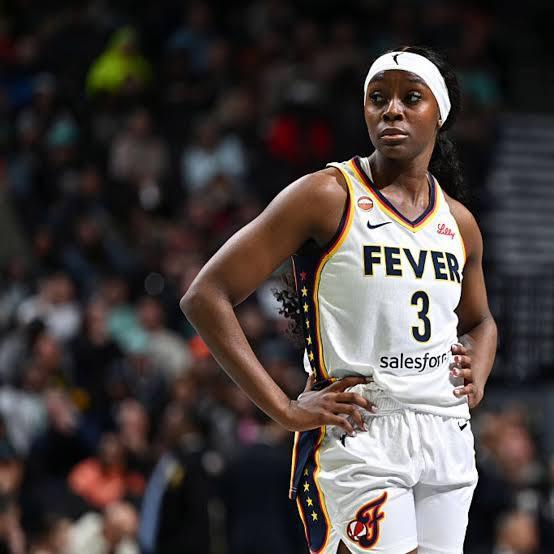
There is something quietly frustrating happening on the Indiana Fever bench, and it deserves a direct, honest examination. Raven Johnson — a player who has done everything asked of her, impressed in every available opportunity, and earned a genuine fan base in Indianapolis — is averaging just 8 minutes per game. In a recent outing, she played just 4 minutes. For a player with her defensive profile, her playmaking ability, and her demonstrated readiness at this level, that number is not a rotation decision. It is a missed opportunity.
The fans who have watched Johnson in every available minute this season are not wrong to be frustrated. The data backs them up entirely.
What She Has Already Shown
Before dissecting what Johnson is not getting, it is worth establishing precisely what she has already demonstrated she can do — because the preseason case for more minutes was overwhelming.
In Indiana’s first preseason game against the New York Liberty on April 25, Johnson finished with six points on perfect 3-of-3 shooting, three rebounds, eight assists, and two blocks in just 18 minutes of playing time. Garnet and Cocky Those are not the numbers of a player still finding her footing in a new environment. They are the numbers of a player who arrived ready.
The second preseason performance reinforced the first. Against the Dallas Wings, Johnson logged 21 minutes and recorded three points, five assists, and five steals Garnet and Cocky — a defensive output that speaks directly to her calling card. Five steals in 21 minutes of preseason basketball is an extraordinary rate of production for a rookie.
Her regular-season debut was more measured. She came off the bench in Indiana’s 107-104 season opener loss to the Dallas Wings and played 12 minutes, converting her only field goal attempt and going 2-of-2 from the free-throw line for four points, while adding two rebounds, two assists, and one steal. Athlon Sports The nerves were visible — head coach Stephanie White acknowledged as much — but the underlying skills were still evident in limited time.
The trajectory from preseason to regular season suggested a player building comfort and confidence. The minutes allocation since then suggests something else entirely.
What the Numbers Are Telling Us
Averaging 8 minutes per game for a player selected 10th overall in the WNBA Draft is not a developmental pace — it is a quiet burial. Johnson spent five collegiate seasons at South Carolina, averaging 9.9 points, 5.1 assists, 4.0 rebounds, and 1.5 steals in 28.6 minutes per game during the 2025-26 campaign, helping South Carolina advance to the national title game. ESPN She was not a bench piece at the college level. She was a starter, a two-way engine, and one of the most productive guards in the SEC.
The translation from college minutes to professional ones will always involve an adjustment, and that adjustment is legitimate. But 8 minutes — and the specific indignity of a 4-minute game — is not an adjustment. It is a marginalization that the available evidence does not support.
Johnson brought an SEC Defensive Player of the Year award, two NCAA championships, and a WBCA Coaches’ All-American selection into the Fever’s building. Wikipedia Her defensive credentials at the college level are not a projection or a potential — they are a demonstrated reality at the highest level of the amateur game. The WNBA is a significant step up, but elite defensive instincts, court vision, and competitive intelligence do not evaporate at the professional level. They develop.
What Stephanie White Said — and What It Implies
Head coach Stephanie White was clear-eyed about Johnson’s limitations early in the season while also expressing genuine belief in her potential.
“A little bit of nerves, as you would expect,” White said after Johnson’s regular-season debut. “Sometimes it’s game one, it’s day one, it’s a different environment.” Athlon Sports
That framing was fair and appropriate for a first professional regular-season game. What followed was both encouraging and revealing about the challenge Johnson faces within this particular roster structure.
“But look, she’ll settle in,” White added. “I thought she did some really good things for us on the defensive end, pushing the ball, pushing pace. So she’s going to be fine.” Athlon Sports
White also made a broader philosophical statement before the season about what the Fever needed from their depth:
“Depth is going to be critical for us. We’ve got to be able to have a quality rotation. We’ve got to be able to get production from multiple players.” Sports Illustrated
That statement and the current reality of Johnson’s playing time are difficult to reconcile. If depth is critical, and if Johnson has already shown she can be a quality rotation contributor — particularly on the defensive end, where the Fever have sometimes struggled to contain opposing guards — the gap between the stated philosophy and the actual minute distribution demands an explanation.
White also emphasized the long-view rationale for having Johnson on the roster: “When you get into the postseason, and you get into series in particular — when we think about seven-game series, you gotta have multiple players that you can count on.” Sports Illustrated
Here is the analytical problem with that framing: you cannot count on players in playoff series whom you have not developed trust in during the regular season. Playoff confidence is built on regular-season experience. A player getting 4 to 8 minutes per game in May will not be ready to assume meaningful responsibility in a seven-game series in September. The development has to happen now, in the regular season, or it does not happen at all.
The Roster Congestion Problem
The honest structural explanation for Johnson’s limited minutes is the depth of Indiana’s guard room, and that depth is real. Caitlin Clark and Kelsey Mitchell are two of the best guards in the league and are not being rotated out of significant minutes for legitimate basketball reasons. Shatori Walker-Kimbrough and Ty Harris provide experienced bench options behind them. Sophie Cunningham and Lexie Hull occupy the wing slots. The Fever are genuinely loaded at guard.
But loaded rosters require coaching creativity, not the passive acceptance of a minutes hierarchy that buries a first-round pick. Johnson was expected to receive consistent playing time and was specifically tasked to provide quality minutes off the bench — playing behind Clark and Mitchell in the backcourt. ChiCitySports “Consistent” and “4 minutes in a game” are not the same thing.
Kelsey Mitchell herself spoke about what Johnson brings to the locker room beyond basketball: “Raven doesn’t have an ego. She wants to learn. I think it’s really, really rare to find 21, 22-year-olds that really want to come in and do their job, be embraced by learning. She’s a sponge, and I love that about her. She wants to learn. She wants to figure out what’s the best thing that she can do for the team, and really be intentional about it.” ChiCitySports
A player described in those terms by a veteran teammate — ego-free, coachable, intentional, a sponge — is precisely the kind of player who flourishes when given consistent opportunity. The attitude is not a problem. The minutes are.
What Johnson Could Be Contributing With Real Time
The most compelling argument for expanding Johnson’s role is not sentimental — it is tactical. The Fever need what she provides in a specific, identifiable way.
Johnson is one of the better defensive guards on the roster at the point of attack. Her 1.5 steals per game in college and the five-steal preseason performance against Dallas were not flukes — they reflect a player with active hands, anticipatory instincts, and the kind of disruptive energy that can change the tempo of a game in real time. In her preseason debut against New York, Johnson finished plus-14 in 17 minutes while recording a steal and two blocks, flashing impressive playmaking as the reigning SEC Defensive Player of the Year. Sports Illustrated
Her playmaking ability is perhaps the most underutilized dimension of her game. At South Carolina she averaged 5.1 assists per game, ESPN a number that reflects genuine passing vision and decision-making rather than the kind of assist accumulation that comes from ball-dominant play. In an offense centered on Clark’s creation, a second playmaker off the bench who can push pace and make reads without demanding touches is an asset, not a redundancy.
The three-point shooting adds another layer. Johnson has been learning about moving without the ball in her hands, noting that “everyone on this team has an elite-level IQ and knows what they’re doing.” Yardbarker A guard who can move off the ball, space the floor, defend at a high level, and push pace in transition is not a specialty player. She is a functional starter on most WNBA rosters.
On Indiana, she is getting 4 minutes.
The Fan Base Is Right to Be Concerned
Johnson has said the WNBA has been her dream since childhood: “I feel like I’m dreaming. I can’t believe I’m in the WNBA. I’ve been dreaming of this since I was a little girl.” Yardbarker The joy and gratitude in that quote reflect a player who wants to be exactly where she is. The question is whether the organization is doing enough to ensure that place becomes meaningful rather than ceremonial.
Fan frustration with Johnson’s minutes is not misplaced loyalty to a popular player. It is an analytically reasonable response to watching a demonstrably capable player disappear into single-digit minutes at a position where her skills are directly applicable to what the team needs. She has shown she can play at this level. She has shown the right attitude. She has shown the defensive instincts and the playmaking creativity.
What she has not been shown is consistent trust from the coaching staff — and in professional basketball, trust is expressed in minutes. Everything else is noise.
The Fever have four games coming up at Gainbridge Fieldhouse in eight days against Washington, Seattle, Portland, and Golden State. If there is a moment to begin integrating Johnson into a more genuine rotation role, it is now, during a stretch at home against a range of opponents, where the risk of expanded minutes is manageable and the developmental benefit is significant.
Raven Johnson has earned more than 8 minutes a night. The data says so. Her teammates say so. The fans watching every possession say so. At some point, the coaching staff will need to say so too — with minutes, not just with words.
About The Author