Williams-Brice Is One of College Football’s Scariest Venues — EA Sports Just Made It Official
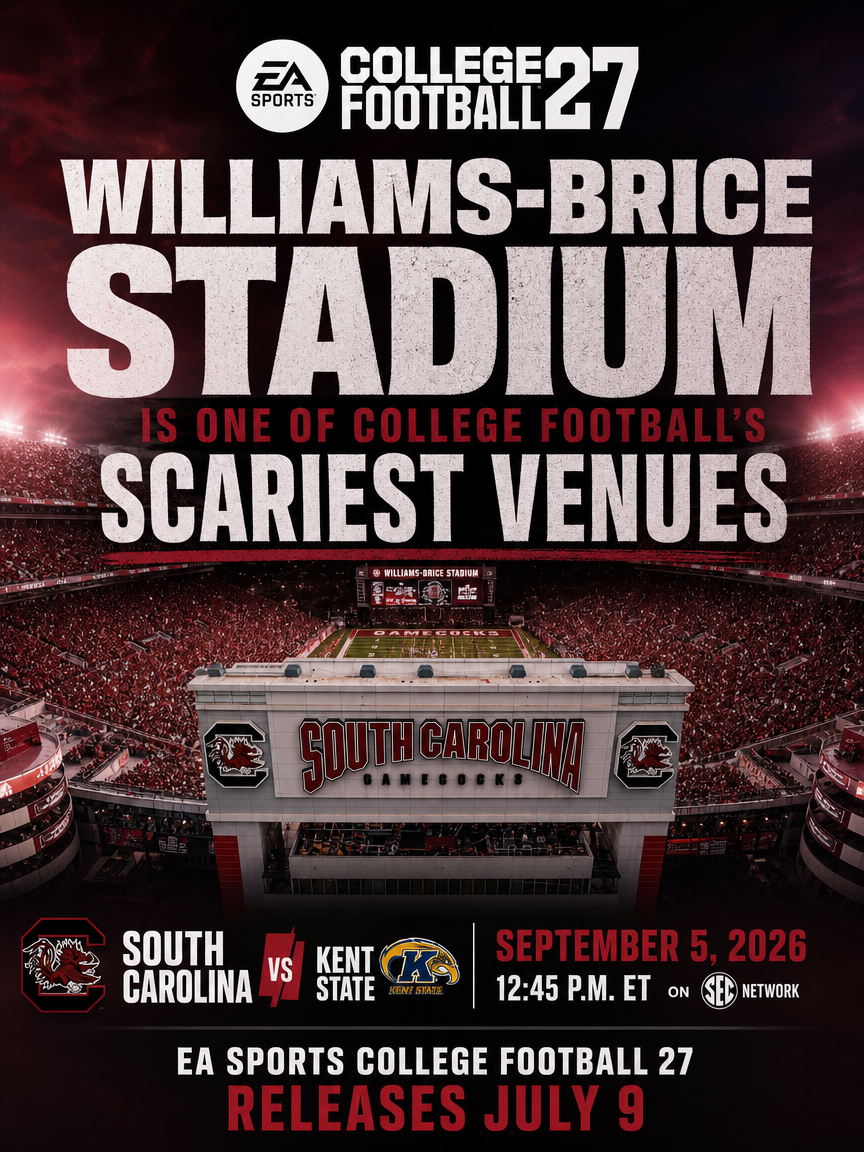
South Carolina’s iconic stadium lands at No. 14 on EA Sports’ CFB 27 toughest venues list, and with a revamped roster and new offensive staff, the Gamecocks are ready to remind everyone why.
It’s the offseason, but college football fans have something concrete to look forward to before the first snap of the 2026 season: EA Sports College Football 27, set for release on July 9. And ahead of launch, EA Sports dropped one of its most debated annual lists — the 20 toughest places to play in college football.
Williams-Brice Stadium came in at No. 14.
For anyone who has stood inside that venue on a Saturday night in Columbia, the ranking feels almost conservative.
The Stadium That Earned Its Reputation
Williams-Brice Stadium isn’t just a football venue. It’s a cultural institution for Gamecock fans, and its atmosphere has long been recognized as among the most intimidating in the country — not just by rival fans, but by data.
Last offseason, On3Sports ranked Williams-Brice as the third loudest stadium in all of college football. EA Sports placing it 14th nationally in CFB 27 is a separate metric — one that accounts for crowd intensity, stadium design, and the kind of psychological pressure the environment puts on visiting teams — but the convergence of both rankings tells the same story: this is one of the most hostile environments an opposing team can walk into.
The signature moment that defines the Williams-Brice experience is the Sandstorm entrance. As the Gamecocks take the field, 77,559 fans sing in unison to Darude’s “Sandstorm” — a tradition that has become one of the most recognizable pregame rituals in the sport. Visiting teams don’t just face South Carolina’s players. They face the noise, the energy, and a crowd that has been building toward that moment all week.
Williams-Brice first opened in 1934 and carries a home record of 302-199-14 — nearly a century of Gamecock football played inside its walls, with all the history and tradition that comes with it.
The 2025 Disappointment Makes 2026 More Dangerous
Context matters here. South Carolina finished 4-8 last season — a result that disappointed a fanbase with legitimate championship aspirations. That kind of season doesn’t cool down a passionate home crowd. It ignites it.
Williams-Brice in 2026 will be fueled by a fanbase hungry to reclaim its program’s identity, and that emotional energy will pour directly into the atmosphere on game days. Visiting teams walking into Columbia this fall won’t just face a desperate crowd. They’ll face a crowd with something to prove.
The Roster That Can Match the Moment
The atmosphere only matters if the team on the field is worth showing up for — and South Carolina’s 2026 roster gives Gamecock fans genuine reasons for optimism.
Quarterback LaNorris Sellers returns as one of the SEC’s most dynamic dual-threat signal callers, and his recent NIL deal with Nike ahead of the brand switchover signals his status as a program centerpiece. Wide receiver Nyck Harbor — also a Nike NIL signee — gives Sellers a legitimate go-to target on the outside. Running back Matt Fuller returns to anchor the ground game, while EDGE rusher Dylan Stewart headlines a defensive front that has the potential to be one of the better pass-rush units in the conference.
The transfer portal additions amplify an already intriguing picture. Offensive tackle Jacarrius Peak addresses one of the program’s most persistent needs up front, while running back Christian Clark provides Fuller with a capable complement in the backfield. The offensive line, historically a question mark under Shane Beamer, enters 2026 with more legitimate depth and talent than it has had in years.
A New Offensive Identity Under Kendal Briles
Perhaps the most significant development surrounding South Carolina football this offseason isn’t on the roster — it’s on the coaching staff.
Sixth-year head coach Shane Beamer hired Kendal Briles from TCU as his new offensive coordinator, a move that signals a deliberate shift in offensive philosophy. Briles brings with him running backs coach Stan Drayton and offensive line coach Randy Clements — an offensive staff overhaul that gives South Carolina a coherent, experience-driven unit working in concert for the first time in recent memory.
Briles’ offenses have historically been uptempo, spread-based, and explosive — a style that should fit Sellers’ skill set well and give the Gamecocks a more defined offensive identity than they’ve had in recent seasons. The combination of Briles’ scheme with Sellers’ athleticism, Harbor’s receiving ability and an improved offensive line is the formula for a significant offensive turnaround.
The Home Opener and What’s at Stake
South Carolina opens the 2026 season at home against Kent State on September 5, with kickoff set for 12:45 p.m. ET on the SEC Network. It’s a winnable opener — the kind of game that, if handled correctly, sets the tone for a season that this program desperately needs to go right.
Williams-Brice ranked 14th nationally by EA Sports. Third loudest stadium in the country by On3. A home record of 302-199-14 built across nine decades of Gamecock football. A rejuvenated roster, a new offensive staff, and a fanbase coming off a 4-8 season that left everyone with something to prove.
The ingredients for a hostile home environment in 2026 are all present. The question isn’t whether Williams-Brice will be loud this fall.
The question is whether the Gamecocks can finally match it.
South Carolina opens the 2026 season at home against Kent State on September 5 at 12:45 p.m. ET on the SEC Network. EA Sports College Football 27 releases July 9.
About The Author