Trick Williams Brings WWE Home to Columbia — and Williams-Brice Came With Him
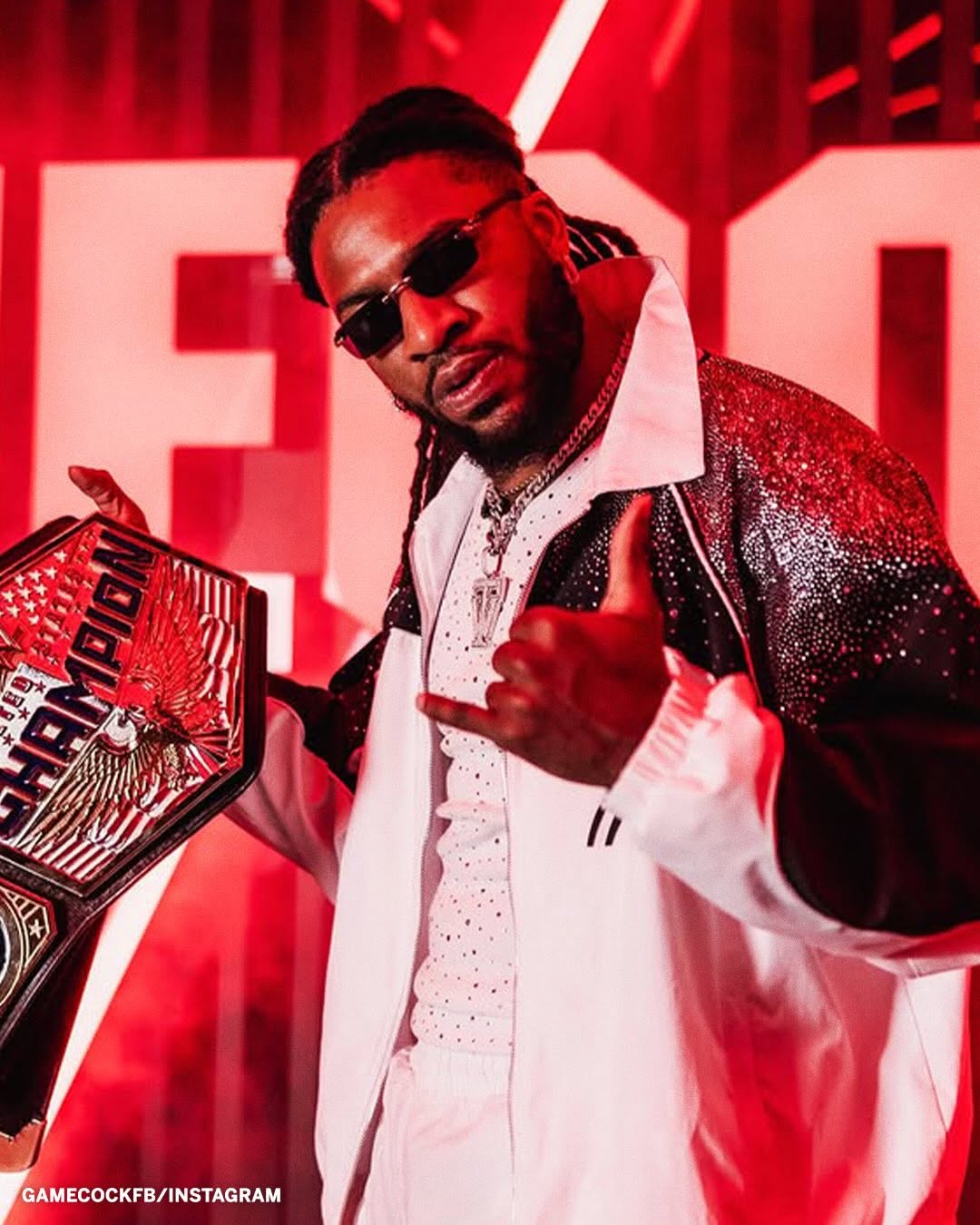
There are homecoming moments in sports and entertainment, and then there are moments that transcend the event itself and become something more personal, more resonant, and more genuinely moving. What happened at Friday Night SmackDown in Columbia, South Carolina fell firmly into the second category.
Trick Williams — WWE United States Champion, former South Carolina Gamecocks wide receiver, and Columbia native — walked into a building full of people who watched him grow up and grow into something they never could have fully anticipated. The result was one of the most electric arena moments SmackDown has produced in recent memory, and it had almost nothing to do with professional wrestling.
When SmackDown Became Williams-Brice Stadium
The production team behind Friday Night SmackDown understood exactly what this moment required. Before Williams’ entrance theme ever played, the arena filled with Darude’s Sandstorm — the song that has soundtracked South Carolina football’s biggest moments at Williams-Brice Stadium for years. White towels came out across the crowd. The building transformed.
For a few minutes, Friday Night SmackDown was a Saturday night in Columbia. The ritual, the noise, the energy — all of it belonged to another context entirely, transplanted into a WWE arena because one man knew exactly how to bring his world home.
Williams was flanked by rapper-turned-manager Lil Yachty and South Carolina’s own mascot, Cocky — a detail that captures the layered identity of this particular homecoming. This was not simply a WWE superstar returning to a local market. It was a Columbia kid, a Gamecock, a wrestler who figured out how to synthesize everything that made him who he is into a single entrance that made perfect sense to everyone in that building.
Williams had set the stage for exactly this in his conversation with GamecockCentral before the event:
“This is a home game. Coming back, it’s just a beautiful thing. This city has given me so much to be proud of and I want to represent the city the right way. This is a beautiful day.”
That framing — home game — is not a throwaway line. For a man who played in front of Williams-Brice crowds during his college career, the stadium’s rituals are embedded in his competitive identity. He did not just reference those rituals; he reproduced them on a WWE stage with deliberate intention.
“You gotta understand, I learned a good entrance from right here at the house. When that 2001 plays, it’s a very, very special thing. We pull out those white towels and that Sandstorm gets to rocking. I figured there’s only one way to do it, which is bringing those white towels out for the all white on with Trick Williams. We’re going to ‘Whoop that Trick’ and bring the Sandstorm to WWE.”
The creative intelligence embedded in that quote matters. Williams did not simply show up in his hometown and soak in the reception. He engineered the moment — designing an entrance experience that would communicate his story to a WWE audience while giving every South Carolina fan in the building something that felt specifically theirs. That kind of cultural fluency is not an accident. It is the product of a performer who deeply understands his audience, his identity, and how to make those two things speak to each other simultaneously.
He delivered on the promise in the ring as well, defeating The Miz in an 11-minute match to close the evening as the same man he arrived as — the United States Champion, in his home city, with his belt.
The Journey That Made This Night Possible
To fully appreciate what Friday’s homecoming represented, it is necessary to trace the path that brought Williams to this moment — because it was neither straight nor guaranteed.
Matrick Belton — his real name — played wide receiver at South Carolina from 2014 to 2016 after beginning his college career at Hampton. Football was the first public chapter of his competitive life, and while his time as a Gamecock did not lead to a professional football career, it gave him something arguably more valuable: a physical foundation, a competitive temperament forged in the SEC, and a connection to a community that would eventually cheer for him in a completely different arena.
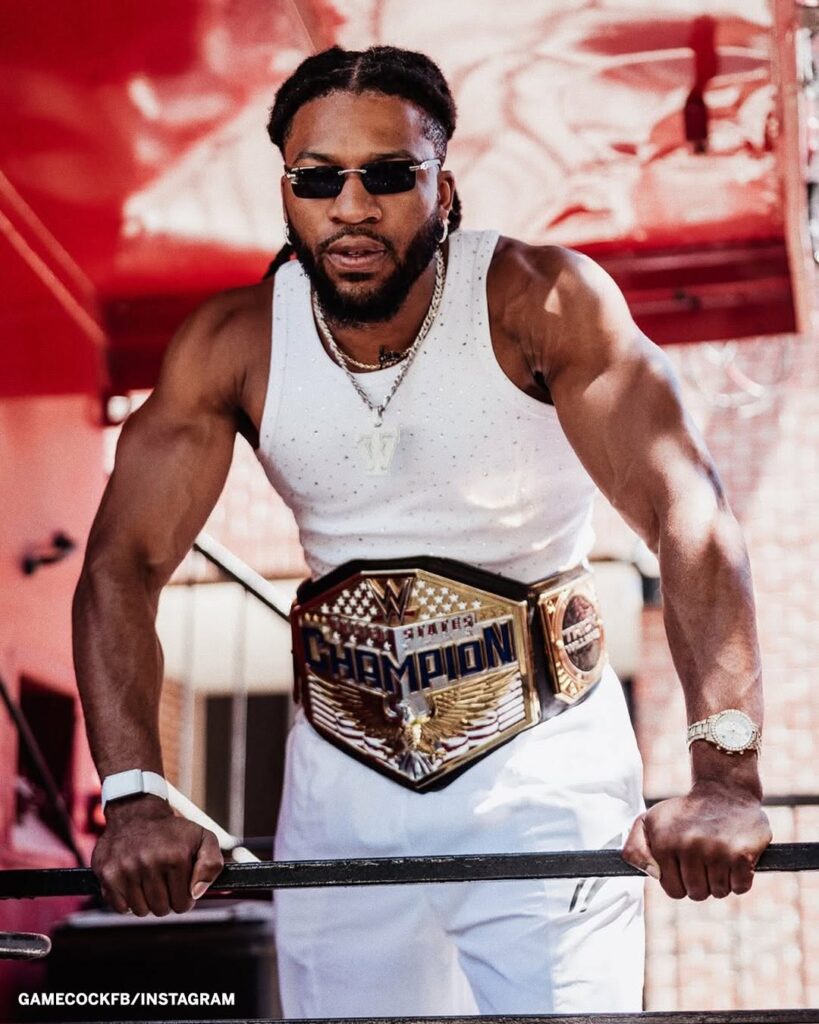
After his college career ended, the path to professional wrestling was not obvious. Williams signed with WWE in February 2021 — five years after his last college football game — and made his debut on the September 14, 2021 episode of NXT. That developmental timeline matters. He did not arrive in WWE with an existing celebrity platform or an easy narrative hook. He built his reputation entirely on the strength of his character work, his in-ring ability, and an innate charisma that quickly made him one of the most compelling personalities in the entire NXT roster.
The NXT career that followed was remarkable in both its quality and its pace. Williams won the NXT Championship twice, captured the NXT North American Championship, and claimed the TNA Championship — a multi-promotional achievement that speaks to his credibility across different organizations and fan bases. By the time WWE called him up to the main roster, the promotion was not taking a developmental flyer on a promising prospect. They were elevating a proven commodity who had spent years demonstrating exactly the kind of star quality that translates to a main roster audience.
His first main roster match came on the January 9 episode of SmackDown — a win over Rey Fenix that announced his arrival without fanfare or delay. What followed compressed years of typical WWE career trajectory into a matter of months.
WrestleMania 42 and the Championship That Changed Everything
The defining professional moment of Williams’ career to date arrived at WrestleMania 42 Night 2, where he defeated Sami Zayn to claim the United States Championship. The significance of that victory extends beyond the title itself.
Winning the United States Championship at WrestleMania placed Williams in an exclusive historical category. He joined Jacob Fatu, John Cena, Kalisto, and Samoa Joe as superstars to win or retain the United States Championship in their first WrestleMania match — a list that requires no elaboration about the caliber of company he now keeps. Cena’s presence on that list alone contextualizes just how rare and meaningful the achievement is.
WrestleMania is the singular annual event around which WWE’s entire calendar is organized — the stage where careers are defined, legacies are cemented, and the sport’s biggest moments are manufactured under the brightest possible lights. For a performer who debuted on NXT just under five years ago, winning championship gold on that stage in his first appearance represents a rise through the ranks that the company typically reserves for talents it considers genuine long-term investments.
The broader announcement had crystallized the narrative Williams was building:
“We’ve got something a little special for everybody with WWE SmackDown. We’re going to show the WWE Universe how South Carolina does it.”
He delivered on exactly that.
What This Homecoming Represents Beyond Wrestling
There is something worth examining in what Friday night in Columbia communicates beyond the immediate spectacle of a wrestling event.
Williams is a Columbia native who went to Hampton and South Carolina for college football, did not make the NFL, pivoted entirely to professional wrestling, spent years in developmental earning everything he achieved, and is now a main roster WWE champion who sold out a building in his hometown while Sandstorm played and white towels waved. That trajectory is not a cautionary tale about an athlete who did not reach his original destination — it is a story about an athlete who found a destination that suited him better than the one he originally aimed for.
The WWE’s decision to bring SmackDown to Columbia and build the evening around Williams’ homecoming is also analytically significant. These decisions are commercial as well as sentimental — the company puts marquee events in markets where marquee talent has real local roots because that connection generates ticket sales, media attention, and the kind of organic crowd energy that makes for compelling television. The fact that WWE chose Columbia, South Carolina for this particular moment is a statement about Williams’ standing within the organization. You do not build an evening around a performer you consider expendable.
For South Carolina fans who watched Williams line up in a Gamecock uniform a decade ago, Friday night offered something genuinely rare: the chance to see one of their own not just succeed in a different arena, but arrive at the apex of that arena and share it with the city that shaped him. The towels, the Sandstorm, Cocky on the entrance ramp — all of it was Williams telling a building full of people that he remembered where he came from, and that he thought enough of where he came from to bring the whole world back to see it.
Trick Williams came home a champion. Columbia gave him exactly the reception he earned.
About The Author