Connor Shaw Turns a Near-Fatal Moment Into a Mission to Save Lives
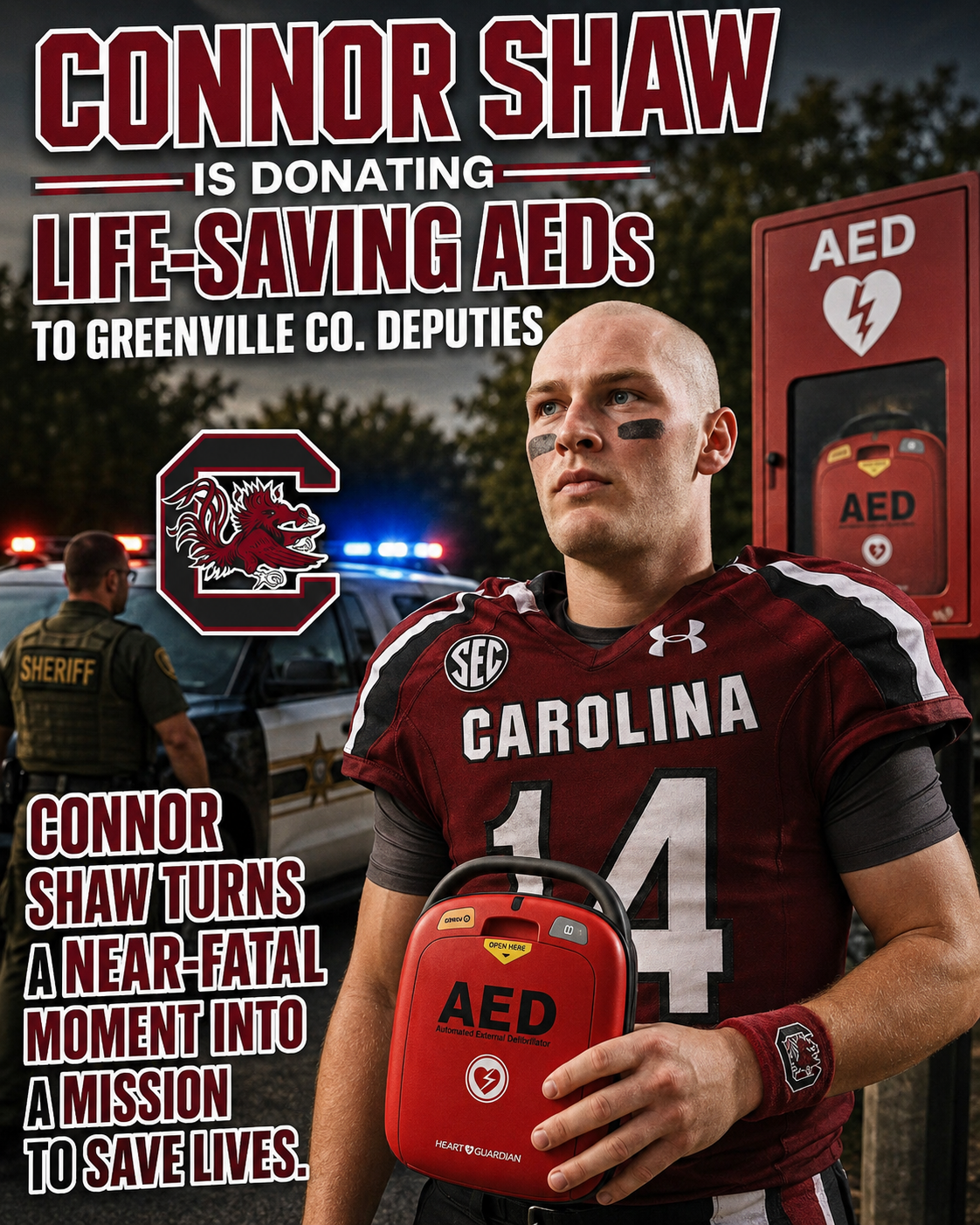
There is a particular kind of advocacy that only comes from lived experience — the kind that doesn’t require a press release or a cause to champion, because the cause found you first. For former South Carolina quarterback Connor Shaw, that moment arrived in September 2025, and it nearly cost him his life.
The Incident That Changed Everything
Shaw suffered sudden cardiac arrest while coaching his son’s flag football game. He was not in a hospital. He was not near a medical team. He was on a sideline, doing what countless parents do on weekend mornings across the country — and his heart stopped.
What saved him was not luck alone. Bystanders acted quickly, and critically, an Automated External Defibrillator was immediately available. That combination — fast human response and accessible equipment — restored his heart rhythm and gave Shaw his life back. Remove either element from that equation, and the outcome is almost certainly different.
Turning Survival Into Action
Rather than treating that experience as a private trauma to move past, Shaw is converting it into community infrastructure. He met with Greenville County Sheriff Hobart Lewis and Chief Deputy Marcus Davenport to formalize plans to donate three AEDs to the Greenville County Sheriff’s Office. The devices will be placed on motorcycles operated by deputies who patrol the Swamp Rabbit Trail — a high-traffic greenway used daily by thousands of walkers, runners, and cyclists.
The specificity of that placement matters. The Swamp Rabbit Trail is not a remote path. It is a heavily used recreational corridor that draws people of all ages and fitness levels, including older adults who statistically carry elevated cardiac risk. Deputies on motorcycles patrolling that trail are already mobile first responders in practice. Equipping them with AEDs closes a critical gap between the moment a cardiac event occurs and the arrival of traditional emergency services.
Why This Matters Beyond the Gesture
AED availability is one of the most well-documented factors in cardiac arrest survival outcomes. Survival rates drop dramatically with every minute that passes without defibrillation — a reality Shaw now understands not as a statistic, but as personal testimony. His donation isn’t symbolic. It is a direct, targeted intervention designed to replicate the exact conditions that saved his own life for the next person on that trail who needs it.
The Greenville County Sheriff’s Office framed the donation accordingly: “We are incredibly grateful for Connor’s generosity and his commitment to protecting our community. These AEDs will provide another life-saving tool for our Swamp Rabbit deputies for the thousands of people who enjoy the trail every day.”
The Larger Lesson
Shaw’s story carries weight well beyond Greenville County. It is a reminder that cardiac arrest does not announce itself, does not discriminate by age or apparent health, and does not wait for convenient circumstances. It can happen on a football sideline just as readily as anywhere else.
What Shaw is doing — quietly, without fanfare, in the community where he lives — is the most direct response imaginable to that truth. He experienced firsthand what accessible emergency equipment can mean. Now he is making sure that equipment exists somewhere it didn’t before, for people who will never know they needed it until the moment they do.
That is not a donation. That is a second chance, passed forward.
About The Author