JD Stein Brings Upside and Unfinished Business to South Carolina’s Shortstop Position
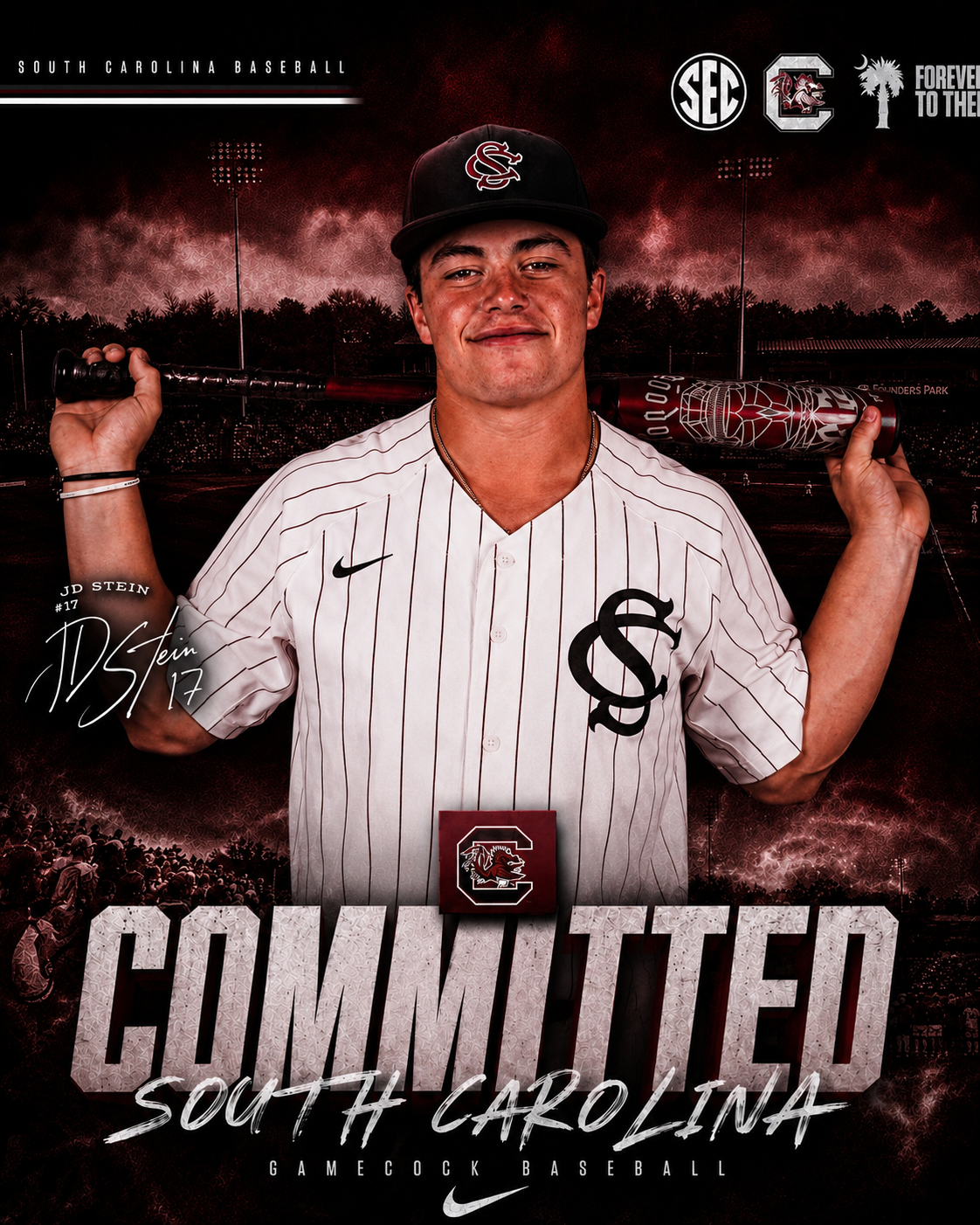
Kevin Schnall’s first transfer portal class is beginning to take shape, and the addition of Wake Forest shortstop JD Stein may be the most consequential piece yet. A true freshman who just completed his debut college season, Stein arrives in Columbia with three years of eligibility, a high-pedigree recruiting profile, and a statistical foundation that suggests legitimate upside — alongside some defensive work that still needs to be done.
The Recruitment: Familiar Faces Made the Difference
Stein’s path to South Carolina runs directly through the coaching staff. He joins former Wake Forest teammate Andrew Costello in Columbia, and more significantly, reunites with hitting coach Bill Cilento — who spent 17 years at Wake Forest before making the move to join Schnall’s staff. That kind of continuity is invaluable in the transfer portal era. Stein isn’t walking into an unfamiliar offensive system or building a new relationship with a hitting coach from scratch. He already knows Cilento, already trusts him, and has experienced firsthand what his development looks like under that guidance.
When a player visits a campus and sees his former hitting coach already installed on the new staff, that’s not a coincidence — it’s a closing argument. South Carolina made the sell, and it worked.
The Offensive Profile: Legitimate Freshman Production
As a true freshman appearing in 58 games for the Demon Deacons, Stein slashed .266/.384/.399 with 10 doubles, five home runs, 41 RBI, and 13 stolen bases in 15 attempts. Perhaps the most underrated number in that line is the 30 walks against 37 strikeouts — a near-even ratio that reflects genuine plate discipline for a 19-year-old in his first college season.
That on-base percentage of .384 isn’t a fluke built on a hot streak. It signals a hitter who understands the strike zone, doesn’t expand, and makes pitchers work. For a program installing a new offensive identity under Schnall and Cilento, having a middle-of-the-diamond player who controls the count is exactly the kind of foundational piece you build around.
The power numbers — five home runs, a .399 slugging percentage — are modest but not concerning for a freshman shortstop. That profile typically grows as a player physically matures through his college career. With three years of eligibility remaining, there is every reason to expect Stein’s offensive ceiling to rise significantly.
The Defensive Reality: A Work in Progress
The honest part of this evaluation is the glove. Stein committed 12 errors this season — the second-most on Wake Forest’s roster — and posted a .934 fielding percentage. Those are numbers that warrant acknowledgment, not dismissal.
Twelve errors in a freshman season at shortstop isn’t disqualifying — the position is the most demanding in the infield, and the adjustment from high school to college defense is real. But it does mean that Stein enters Columbia as a developmental project on that side of the ball, not a finished product. South Carolina’s new coaching staff will have to invest time and reps in tightening his footwork, arm accuracy, and decision-making at the six.
The path to being a reliable everyday shortstop at the college level is achievable. The pedigree says he belongs there — Stein was rated the No. 5 overall prospect and No. 1 shortstop in Indiana by Perfect Game in the Class of 2025. Elite recruiters don’t miss on those evaluations entirely. But the 2027 version of JD Stein at shortstop needs to look meaningfully different than the 2026 version did at Wake Forest.
The Bigger Picture: Schnall Building His Foundation
Stein’s commitment is notable not just for what he brings individually, but for what it signals about how Kevin Schnall is constructing this roster. Targeting a high-upside freshman with three years of eligibility — rather than a veteran portal piece for a quick fix — suggests Schnall is building for a sustained run, not just papering over the program’s immediate wounds.
Pairing Stein with Cilento, a coach who already has an established relationship with the player, minimizes transition friction and accelerates development. That’s smart roster construction in the portal era, where fit and familiarity often determine how quickly a transfer actualizes his potential.
South Carolina now has its candidate for the starting shortstop job in 2027. Whether Stein grows into that role fully will depend on how much his defense tightens and how his already-promising bat continues to develop under Cilento’s guidance. The raw materials are there. The work is just beginning.
About The Author